The restaurant
Service takes place in the rooms of the palmento, between the lava stone and the exposed beams. In the cold season the fireplace stays lit.
The kitchen
The property
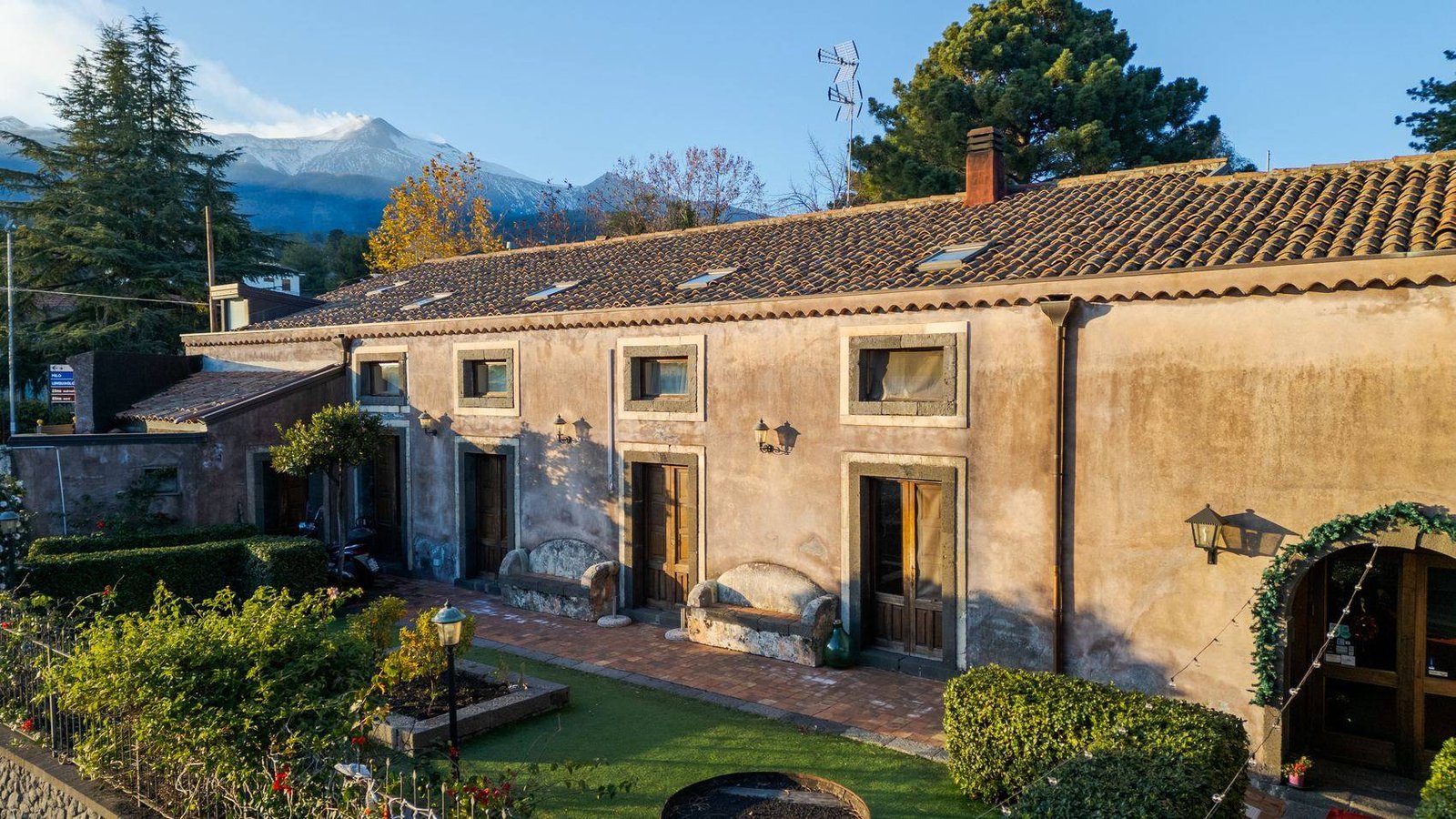
The building where grapes from the slopes of Etna were once made into wine, now given over to the restaurant, the guest rooms and ceremonies.

What a palmento is
The palmento was the building where grapes were pressed and the must left to ferment. The mechanism is elementary: a very large beam, a hand-carved wooden screw and a stone acting as a counterweight. The grapes were gathered in the basin, the beam came down and the must ran off into the palmento itself.
Presses of this kind were common throughout the Etna countryside, where every family with a few rows of vines made its own wine. Most were dismantled over time to recover space; this one was kept where it stood.
The spaces
Restaurant, guest rooms and ceremony hall share the same building and the same courtyard.
Service takes place in the rooms of the palmento, between the lava stone and the exposed beams. In the cold season the fireplace stays lit.
The kitchen
On the upper floor, beneath the beamed roof. Three types, from two to four beds, with private bathroom.
The rooms
The space given over to communions, confirmations, christenings and anniversaries, with the exposed lava stone wall and the fireplace.
Ceremonies
The building
A sequence of lava stone rooms, a roof of curved tiles and the courtyard in front: the recurring form of the country houses on the eastern slope.
The restoration dealt with the services and the bathrooms, leaving the original structure untouched. The stone walls hold the temperature through the summer months and the fireplace remains a working feature in winter; each room keeps a shape of its own.
The video
The lava stone rooms, the press and the courtyard, filmed one after another. The button reopens it full screen.
Gallery
For dinner, for a stay or for a visit ahead of a ceremony.